
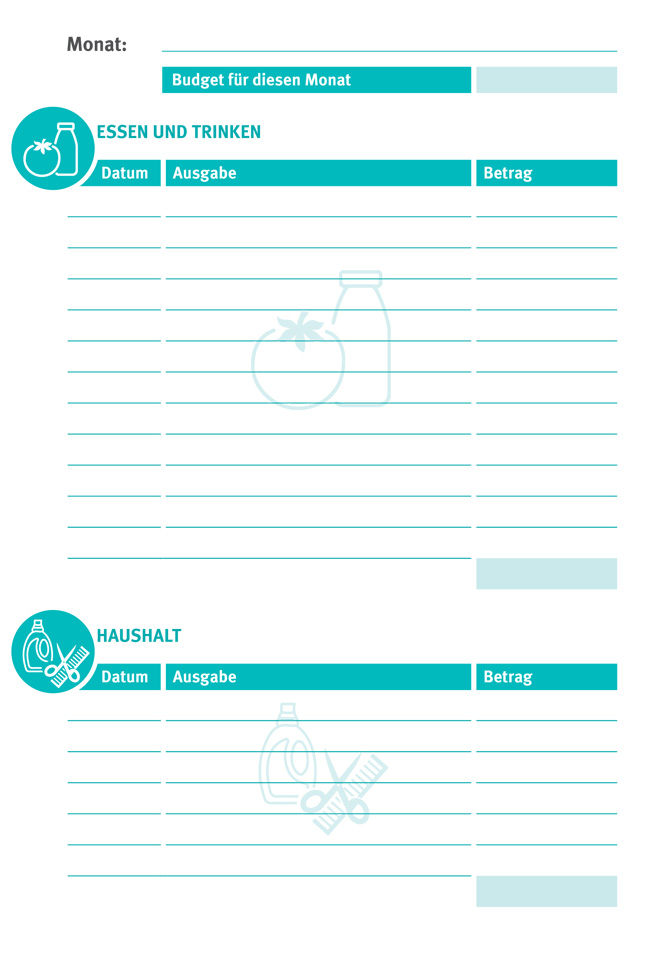
A well-structured personal or household budget is a cornerstone of financial stability and peace of mind. Without a clear understanding of where your money comes from and where it goes, it’s easy to feel adrift, making it challenging to save for future goals or manage unexpected costs. Implementing effective Haushaltsplan Tipps can provide clarity, help you identify areas for savings, and ultimately put you in control of your financial destiny, rather than letting your finances control you.
Overview
- Understanding your income and expenses is the foundational step for any budget.
- Categorizing spending into fixed and variable costs helps reveal where your money truly goes.
- Choosing a suitable budgeting method, like the 50/30/20 rule or zero-based budgeting, provides a framework.
- Regularly tracking expenditures, whether with apps, spreadsheets, or notebooks, is crucial for adherence.
- Automating savings and bill payments can significantly improve financial discipline.
- Setting clear, achievable financial goals provides motivation and direction for your budgeting efforts.
- Building an emergency fund is a critical Haushaltsplan Tipps for resilience against unforeseen financial challenges.
- Reviewing and adjusting your budget regularly ensures it remains relevant to your changing financial situation.
Setting Up Your Initial Haushaltsplan Tipps
Embarking on the budgeting journey begins with a clear assessment of your current financial landscape. The very first of the essential Haushaltsplan Tipps is to meticulously document all sources of income. This includes your salary, any freelance earnings, benefits, or other regular inflows of money. Once you have a precise figure for your monthly income, the next critical step is to list all your expenses. Start by categorizing them into fixed and variable costs. Fixed expenses are those that generally remain the same each month, such as rent or mortgage payments, loan installments, insurance premiums, and subscription services. Variable expenses, on the other hand, fluctuate and include groceries, transportation, entertainment, dining out, and personal care items.
Choosing a budgeting method that aligns with your lifestyle is also vital. Popular options include the 50/30/20 rule, where 50% of your income goes to needs, 30% to wants, and 20% to savings and debt repayment. Another effective strategy is zero-based budgeting, which involves assigning every dollar of income to a specific expense, saving goal, or debt payment, ensuring no money is left unaccounted for. For those in the US, many free online templates and apps can help streamline this initial setup, providing a visual representation of your financial inflows and outflows.
Practical Strategies for Daily Haushaltsplan Tipps
Once your budget is established, the real work begins: sticking to it. One of the most impactful Haushaltsplan Tipps for daily adherence is consistent expense tracking. This doesn’t need to be a burdensome task. Utilize budgeting apps that link directly to your bank accounts, simple spreadsheets, or even a pen-and-paper notebook to log every expenditure. The key is regularity; by reviewing your spending daily or weekly, you maintain awareness and can make immediate adjustments if you notice you’re overspending in a particular category.
Another practical tip is to automate your savings. Set up automatic transfers from your checking account to your savings account immediately after you get paid. Even small, consistent amounts can accumulate significantly over time. Similarly, automate bill payments to avoid late fees and manage cash flow more effectively. Reducing unnecessary expenses is also a continuous process. Regularly audit your subscriptions – are you still using that streaming service or gym membership? Meal planning can drastically cut down on grocery bills and impulse restaurant spending. By implementing these strategies, you make adherence to your budget a habit rather than a chore.
Overcoming Challenges with Smart Haushaltsplan Tipps
Even the most meticulously planned budget can face challenges, but proactive strategies can help you overcome them. One of the most common hurdles is unexpected expenses. This is where an emergency fund becomes indispensable. Aim to save at least three to six months’ worth of essential living expenses in an easily accessible savings account. This fund acts as a financial safety net, preventing you from derailing your budget or going into debt when unforeseen costs like car repairs or medical bills arise. This is a crucial Haushaltsplan Tipps for long-term stability.
Staying motivated is another challenge. It’s easy to get discouraged if you occasionally overspend. Instead of giving up, view it as a learning opportunity. Adjust your budget for the following month, perhaps allocating a bit more to the category where you overspent. Involving your household in the budgeting process can also foster a shared sense of responsibility and motivation. Discuss financial goals as a family, allowing everyone to contribute ideas for saving and spending. Avoiding common pitfalls such as unrealistic budgeting (cutting too much too soon) or neglecting small, frequent purchases (the “latte factor”) will also contribute to your success.
Advanced Haushaltsplan Tipps for Long-Term Success
Beyond the foundational aspects, there are advanced Haushaltsplan Tipps that can propel you towards greater financial freedom and long-term success. The most significant of these is setting clear, specific financial goals. These could range from short-term goals like saving for a vacation or a new gadget, to long-term aspirations such as buying a home, funding your children’s education, or preparing for retirement. Breaking down large goals into smaller, manageable steps makes them less daunting and provides tangible milestones to celebrate.
For those with debt, integrating a robust debt management strategy into your budget is paramount. Strategies like the snowball method (paying off the smallest debt first to gain momentum) or the avalanche method (paying off the debt with the highest interest rate first to save money) can be incredibly effective. As your budget becomes more robust and you accumulate savings, consider exploring basic investment options suitable for your risk tolerance. Regular financial reviews, perhaps quarterly or annually, are also essential. During these reviews, assess your progress towards your goals, make adjustments based on life changes (e.g., a new job, marriage, children), and ensure your budget continues to serve your evolving financial needs. These strategic reviews reinforce your financial discipline and position you for sustained financial well-being.
About the Author


