
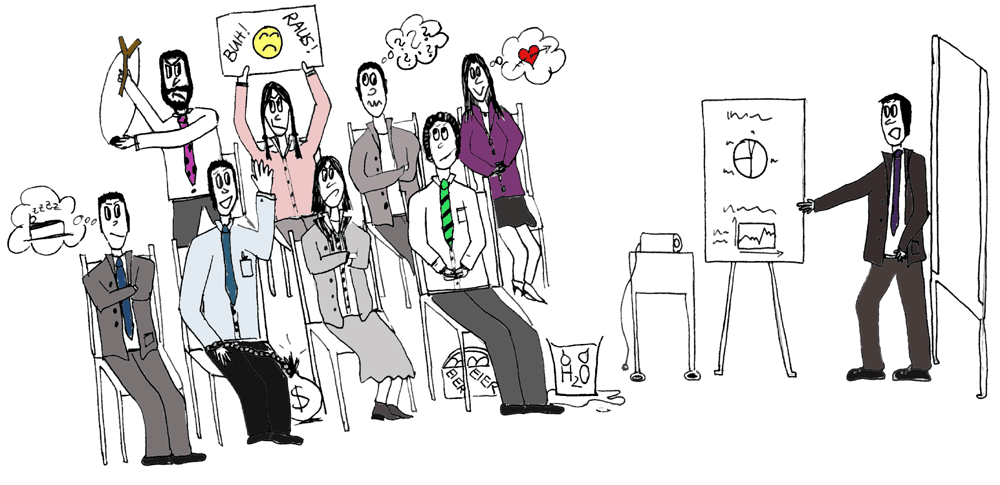
In today’s fast-paced world, the ability to communicate ideas clearly and persuasively is more crucial than ever. Whether you’re presenting to colleagues, clients, or a large public audience, the choices you make regarding your Präsentationstechnik directly impact how your message is received. It’s not just about what you say, but how you say it, how you show it, and how you connect with those listening. Many people often wonder, “Which presentation technique do I truly need to make my talk memorable and effective?” The answer isn’t one-size-fits-all; instead, it depends heavily on several interconnected factors that shape the entire experience.

Overview
- The selection of appropriate Präsentationstechnik is crucial for effective communication.
- Understanding your audience’s background, expectations, and needs is the foundational step in choosing your technique.
- Clearly defining your presentation’s goal—whether to inform, persuade, or entertain—guides your technical and stylistic choices.
- Various tools, from traditional whiteboards to advanced interactive software, serve different purposes and audience sizes.
- Mastering delivery involves more than just speaking; it includes body language, tone, and strategic use of visual aids.
- Audience engagement strategies are vital for maintaining interest and ensuring message retention.
- Rehearsal and adaptability are non-negotiable for a polished and responsive presentation.
Selecting the appropriate Präsentationstechnik is a dynamic process that starts long before you step in front of an audience. It requires a thoughtful assessment of your environment, your message, and your listeners. From the formal boardroom pitches common in the US business world to academic lectures or informal community talks, each scenario demands a tailored approach to ensure maximum impact and clarity. It’s about finding the sweet spot where your message resonates most powerfully with the people in the room.
Understanding Your Audience for Effective Präsentationstechnik
Who are you speaking to? This fundamental question should always be the first consideration when determining your Präsentationstechnik. An audience of industry experts will respond differently than a group of high school students or potential investors. Consider their prior knowledge of the subject: are they beginners who need foundational explanations, or seasoned professionals looking for advanced insights? What are their expectations for the presentation? Are they looking for data-driven analysis, inspiring stories, practical solutions, or perhaps a blend of all three?
For instance, a technical audience might appreciate detailed slides with charts and graphs, allowing them to follow complex information visually. A general audience, however, might find such slides overwhelming and prefer fewer words, more images, and a strong narrative. The language you use, the examples you provide, and even the pace of your delivery should be adjusted to match your audience’s demographic and psychographic profile. Misjudging your audience can lead to disengagement, confusion, or a perceived lack of relevance, regardless of how good your content might be.
Defining Your Purpose: The Core of Your Präsentationstechnik
Every presentation has a goal. Before you even think about slides or visual aids, ask yourself: What do I want my audience to think, feel, or do after this presentation? Your purpose profoundly shapes your choice of Präsentationstechnik. If your goal is to inform, your technique might lean towards clear, structured data, logical flow, and perhaps handouts for future reference. If you aim to persuade, your technique will likely incorporate compelling storytelling, emotional appeals, strong calls to action, and evidence that supports your arguments.
When the objective is to train or teach, interactive elements like quizzes, group discussions, or hands-on exercises become essential parts of your Präsentationstechnik. If the purpose is simply to entertain, humor, captivating visuals, and a relaxed, engaging delivery style will take precedence. A clear understanding of your core objective prevents you from getting sidetracked by flashy but ultimately ineffective techniques. It ensures every choice, from slide design to vocal tone, contributes directly to achieving your desired outcome.
Choosing the Right Tools for Your Präsentationstechnik
The array of available tools for Präsentationstechnik is vast, and picking the right ones is pivotal. PowerPoints and Keynotes remain staples, offering structured slide-by-slide progression. They are excellent for formal reports, sales pitches, or educational lectures where a linear flow is beneficial. However, for a more dynamic and non-linear approach, tools like Prezi can offer a “zooming” interface that emphasizes connections between ideas rather than a strict sequence.
Beyond software, consider physical tools. A simple whiteboard or flip chart can be incredibly effective for brainstorming sessions, impromptu explanations, or audience interaction, allowing for real-time adjustments and collaboration. For smaller groups, physical props or product demonstrations can add a tangible dimension that slides cannot replicate. Interactive screens or touchpads are growing in popularity, especially for showcasing digital products or engaging younger, tech-savvy audiences. The best tool isn’t necessarily the most advanced; it’s the one that best supports your message and your interaction with the audience.
Mastering Delivery Methods in Your Präsentationstechnik
Even with perfect slides and a well-defined purpose, the delivery of your presentation is where the magic truly happens. Your physical presence, voice, and ability to connect are vital components of your Präsentationstechnik. Good delivery involves a confident posture, appropriate eye contact that sweeps across the room, and gestures that emphasize your points without distracting. Your voice should be clear, varied in pitch and pace to maintain interest, and projected adequately for the space. Avoiding monotone delivery is key to keeping attention.
Equally important is knowing when and how to integrate your visual aids. Slides should support your speech, not replace it. Avoid reading directly from slides; instead, use them as cues and visual anchors for your audience. Practice your timing, moving smoothly between talking and referring to your visuals. Audience engagement is another critical aspect of delivery. This can involve asking rhetorical questions, prompting discussion, telling relevant anecdotes, or incorporating activities that require participation. A presentation is a dialogue, not a monologue, and fostering that interaction makes a significant difference in how your message is absorbed.
About the Author


